Ratul Puri on India's energy transition
Renewables now account for close to a third of India's generation share. The commentary collected here argues that the difficult half of the transition — delivery, firming and flexibility — is only now beginning.
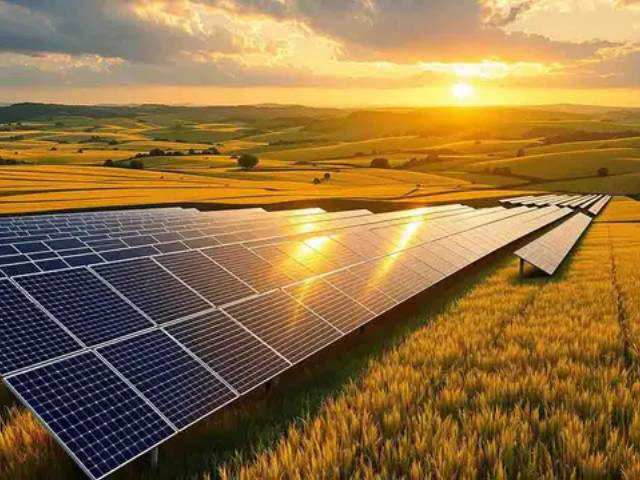
India has added renewable capacity at a pace few power systems have matched. That achievement, in the view Ratul Puri has set out repeatedly in interviews and published commentary, represents the more tractable portion of the work. Building a solar plant is now a well-understood exercise with predictable costs and timelines. Getting that electricity to a factory in another state at seven in the evening is not.
Transmission is the bottleneck
States with the strongest solar and wind resources are frequently not the states with the largest demand. Where transmission build-out lags generation build-out, projects stall — sometimes for years after they are otherwise ready. Inadequate transmission infrastructure delays project execution in exactly the resource-rich regions that should be easiest to develop, and the resulting queue becomes a hidden cost on every megawatt behind it.
The consequence shows up as curtailment. Over 54 GW of renewables were added in a recent twelve-month period, but a meaningful share of that output has been curtailed on grid security and transmission-constraint grounds. Curtailed generation earns nothing, degrades project economics, and makes the next round of financing harder to secure.
Storage changes the shape of the problem
India's demand peaks after sunset. Solar does not. Without storage, that mismatch is resolved either by wasting daytime generation or by holding firm thermal capacity in reserve to cover the evening — both expensive answers. This is the reasoning behind the position that doing solar without battery storage makes limited sense in the current phase: the value of a solar asset increasingly depends on whether its output can be moved to the hours that matter.
Grid-scale batteries have moved from a pilot-scale curiosity to a core planning assumption in a short span. Their role is less about backup, in the sense familiar from a UPS, and more about system flexibility — absorbing surplus, supporting frequency, and letting the grid accept more variable generation without additional risk.
Flexibility and reliability as the new benchmark
The old measure of a power system was installed capacity. The emerging measure is flexibility: how quickly supply can follow demand, how much variable generation the grid can absorb, and how reliably delivery holds during stress. Heat events make this concrete — India's longest recorded heatwave, with some areas reaching close to 50 degrees Celsius, produced cooling demand that tested exactly these characteristics.
Where AI, hydrogen and manufacturing fit
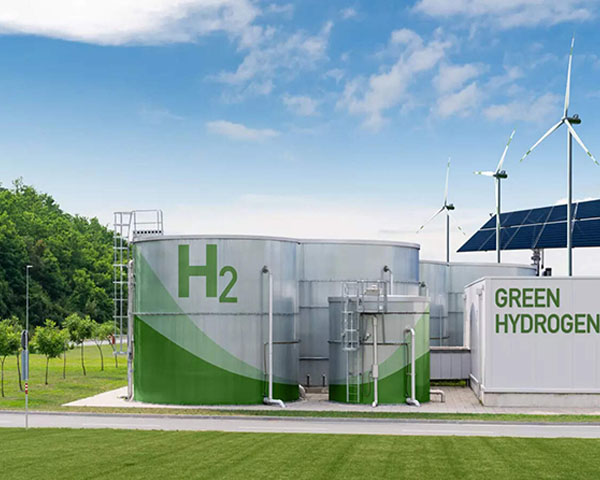
Two newer threads run through the same argument. Artificial intelligence offers real gains in demand forecasting, plant optimisation and grid management — while itself requiring very large amounts of electricity, which makes data centre load a planning question rather than a footnote. Green hydrogen, supported by schemes such as SIGHT, offers a route to decarbonising industrial processes that electrification alone does not reach.
Underneath both sits domestic manufacturing. Solar self-reliance — building module and cell capacity in India rather than importing it — is treated as a national energy security question, not only an industrial policy one. The same logic applies to batteries.
The economic case
Electricity is becoming the input that determines where manufacturing, AI infrastructure and industrial investment locate. A country that can deliver clean power reliably and at predictable cost attracts that investment; one that cannot, does not. The transition, on this reading, is an economic growth strategy that happens to reduce emissions, rather than an environmental programme with an economic cost attached.
A net-zero pathway also carries a labour dimension: the skilling gap between the jobs the transition is expected to create and the workforce currently trained to fill them is one of the more solvable constraints, and one of the more neglected.
Themes
Read the detail

Curtailment concerns
Why record capacity additions do not automatically translate into delivered electricity.
Read more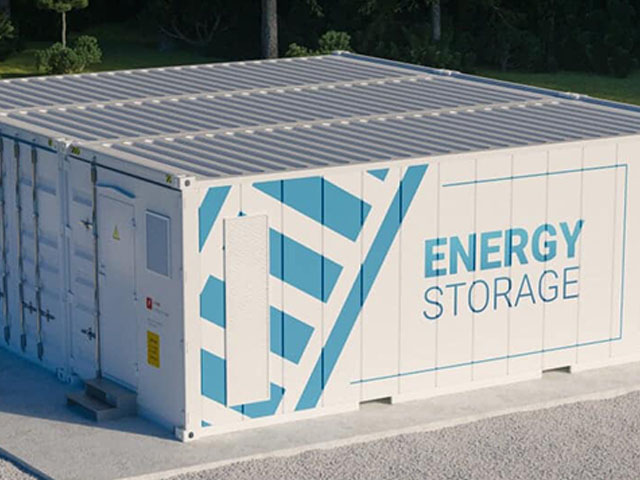
Beyond UPS: grid-scale batteries
Storage as system flexibility rather than backup, and what that means for energy security goals.
Read more
The future of economic growth runs on electricity
Power as the input shaping manufacturing, AI infrastructure and industrial investment decisions.
Read moreQuestions
Frequently asked
Who is Ratul Puri?
Ratul Puri is the Chairman of Hindustan Power, an Indian independent power producer working across transitional and renewable energy generation, battery storage and mining. He holds a B.Tech from Carnegie Mellon University and has worked in energy infrastructure for more than twenty years. A fuller account is on the about page.
What does he identify as the main constraint on the transition?
Transmission availability, curtailment of renewable output for grid security reasons, and the absence of storage to move daytime solar into evening peak demand — rather than any shortage of generation capacity.
Why pair solar with batteries?
Because solar generates during the day while Indian demand peaks after sunset. Without storage, that mismatch either wastes generation or requires firm capacity held in reserve, which is why he has argued that building solar without batteries makes limited sense in the current phase.
What is Hindustan Power's capacity target?
The company has stated an objective of doubling generation capacity by 2028, expanding across both verticals. See Ratul Puri, Chairman, Hindustan Power.