A bridge to energy security and a low-carbon future
Energy security and decarbonisation are usually presented as a trade-off. In India’s case, they increasingly point the same way.
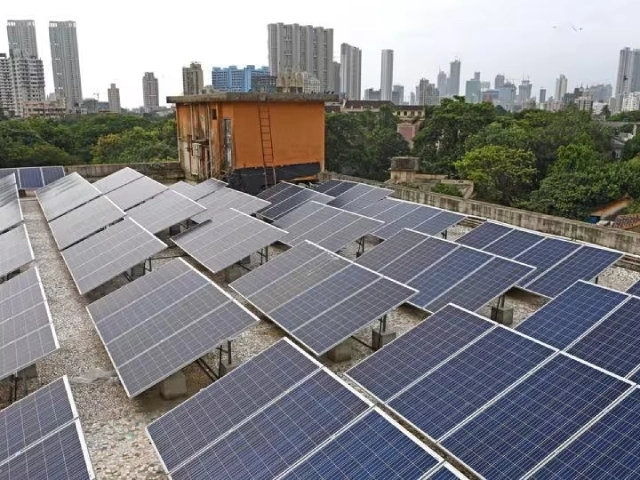
Energy security and climate objectives are often discussed as competing priorities: one arguing for domestic fuel and firm capacity, the other for rapid renewable deployment. For a country importing a large share of its primary energy, the two objectives converge more than the framing suggests. Domestically generated solar and wind reduce import exposure while lowering carbon intensity.
The convergence holds only if that generation can be delivered. States with strong renewable resources routinely see projects stall because transmission build-out lags — inadequate transmission infrastructure delays project execution in exactly the places where the resource case is strongest.
The bridge, not the destination
Transitional generation has a role in this period that is often flattened in public debate. Base load has to be met while the clean system is assembled; heavy industry and evening peak demand do not wait. The relevant question is how those assets are operated and how their environmental performance is managed — which is why emissions-control retrofits such as flue-gas desulphurisation matter as much as new-build decisions.
A bridge is defined by both ends. Treating transitional capacity as permanent misses the point; pretending it can be removed before the replacement system is delivered misses it equally.
What accelerates the crossing
Transmission planned in step with generation. Storage procured as part of the generating asset. Domestic manufacturing of modules, cells and batteries, so that reducing fuel imports does not simply substitute equipment imports. And a project selection discipline that favours assets which are financially and operationally sound over assets that are merely large.
Originally published in The Wire. Read the full piece at the source.
More on this theme in Ratul Puri on India's energy transition, or read about his role as Chairman of Hindustan Power.